Double-Oaked vs. Toasted Barrel Bourbon: Woodford Double Oaked, Old Forester 1910 & Cigar Pairings
How secondary barrel finishing transforms Kentucky bourbon into liquid dessert: the chemical difference between heavy char versus low-heat toast, and how to pair both with cigars.
Table of Contents
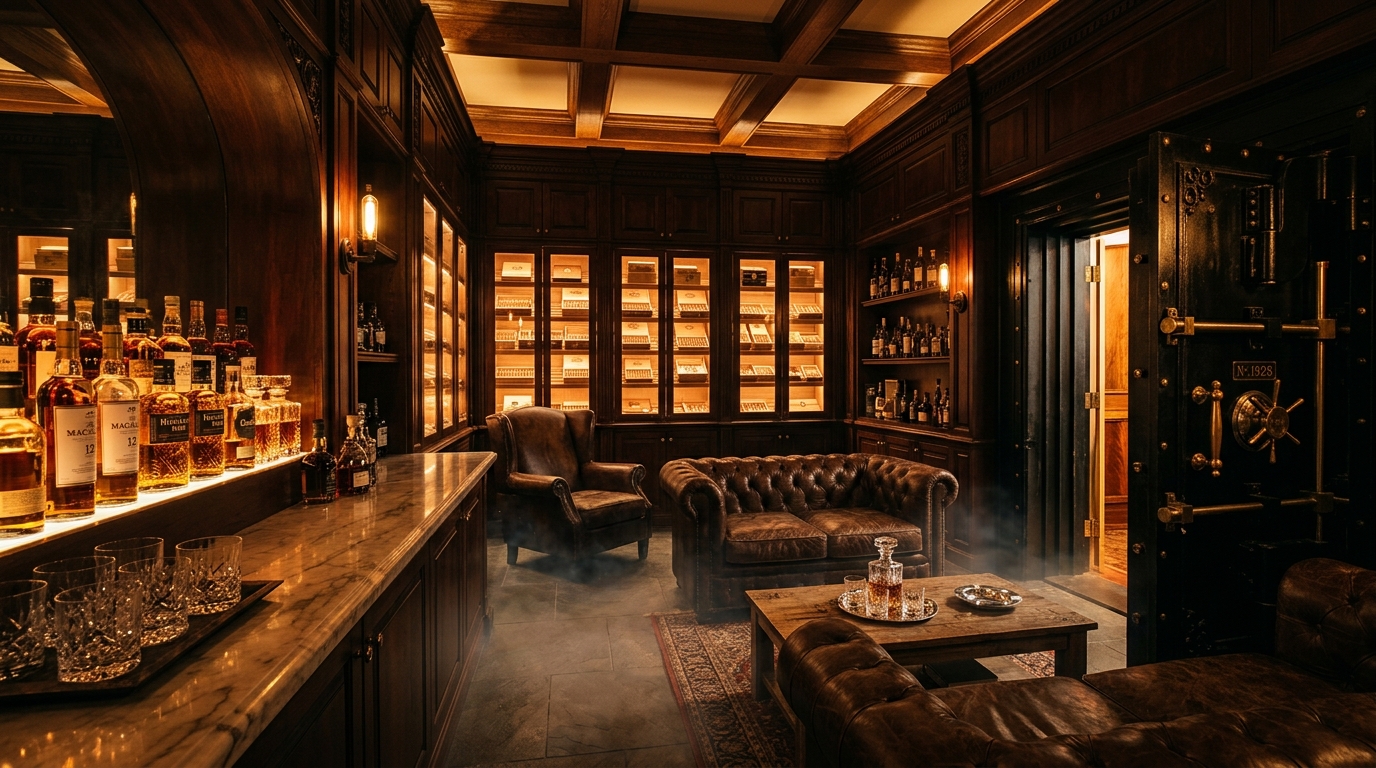
Over the past decade, no category of American whiskey has won over cigar smokers faster than secondary oak-finished bourbon—headlined by heavyweights like Woodford Reserve Double Oaked, Old Forester 1910 Old Fine Whisky, Elijah Craig Toasted Barrel, and Michter's Toasted Barrel Finish.
Collectors often refer to these bottles as "dessert bourbons" because they explode with aromas of campfire s'mores, toasted marshmallow, crème brûlée, dark maple syrup, and melted milk chocolate.
Yet while "Double-Oaked" and "Toasted Barrel" are frequently lumped together on liquor store shelves, cooperages build those second barrels using two very different thermal processes—resulting in starkly different flavor profiles in your Glencairn glass.
Cooperage Chemistry: Heavy Toasting vs. Deep Charring
Every straight bourbon starts its life inside a brand-new, charred American white oak barrel. What happens when a master distiller dumps that mature bourbon into a second virgin oak barrel depends entirely on how the cooperage treated the wood with fire:
1. Toasted Barrel Finishing (Low Heat, Long Duration)
Instead of blasting the wood with a 2,000°F flame, the cooperage gently heats the staves over a controlled fire for 15 to 40 minutes.
- Chemical Effect: Slow heat penetrates deep into the oak without turning the surface to carbon char, breaking down hemicellulose and lignin into vanillin (pure vanilla bean), lactones (toasted coconut), and spicy clove.
- Flavor Profile: Marshmallow fluff, vanilla wafer, baking spice, toasted coconut, and lighter, silkier oak tannins.
2. Double-Oaked / Deep-Char Finishing (Toast + Heavy Flame Char)
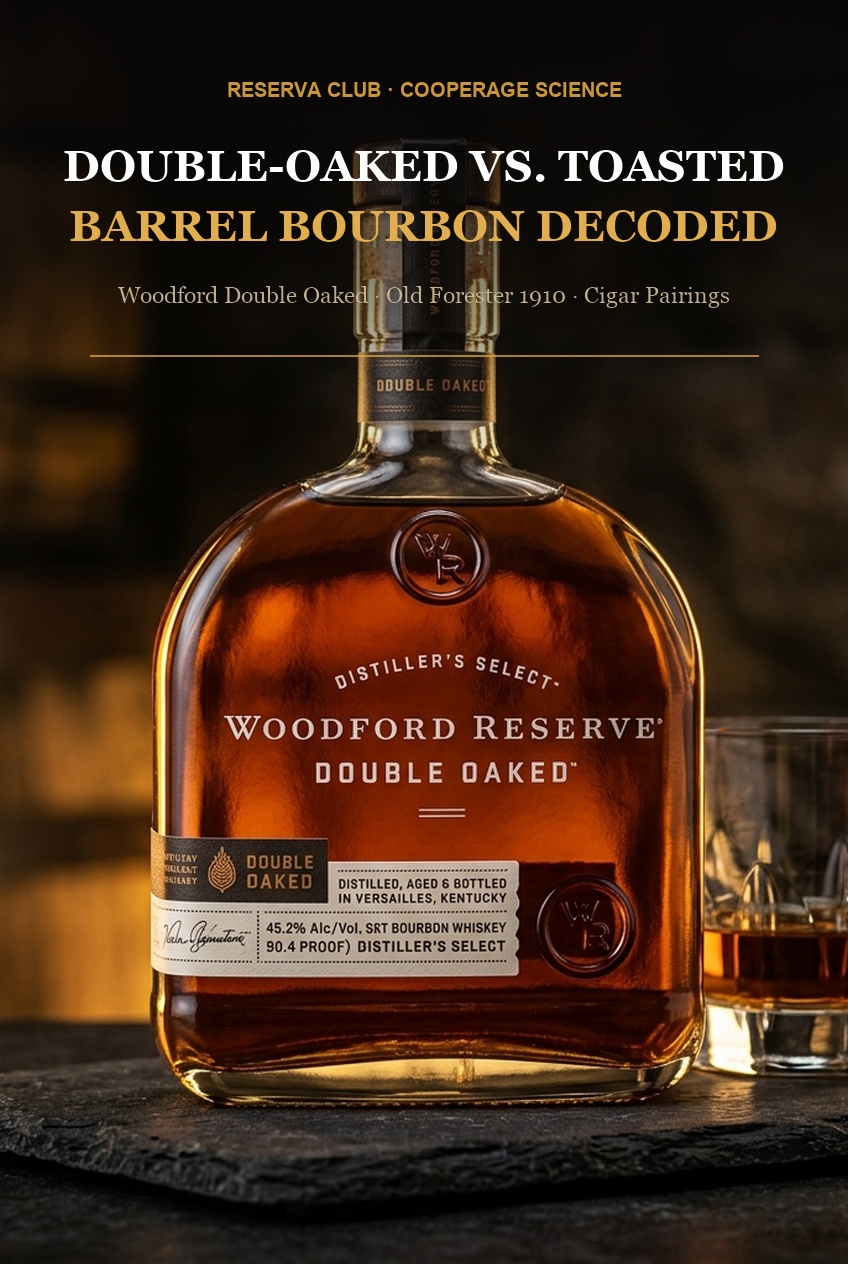
For expressions like Woodford Reserve Double Oaked or Old Forester 1910, the second barrel is deeply toasted and then heavily charred (often right up to the point where the barrel staves blister like alligator skin).
- Chemical Effect: The heavy char creates a thick layer of caramelized wood sugars and activated carbon right on the surface. Because the bourbon enters the second barrel for a shorter window (typically 6 to 12 months), it extracts massive maple syrup, dark espresso, butterscotch, and fudge before bitter oak tannins can take over.
The Big 4 Secondary-Oak Bourbons Compared
| Bottle | Proof | Second Barrel Treatment | Signature Tasting Notes | Best Cigar Pairing |
|---|---|---|---|---|
| Woodford Reserve Double Oaked | 90.4° | Heavily toasted, lightly charred 2nd barrel (9–12 mos) | Marzipan, dark caramel, honeyed oak, milk chocolate | Liga Privada No. 9 or Ashton Aged Maduro |
| Old Forester 1910 (Old Fine Whisky) | 93° | Enters 2nd barrel at 100° entry proof; heavily charred almost to incineration | Campfire marshmallow, chocolate fudge, cherry cordial | Padrón 1964 Anniversary Maduro |
| Elijah Craig Toasted Barrel | 94° | Custom 18-month air-dried oak, toasted then flash-charred | Toasted coconut, buttercream frosting, warm white pepper | Oliva Serie V Melanio (Sumatra wrapper) |
| Peerless Double Oak Bourbon | ~108°–112° (Cask Strength) | Uncut barrel proof into 2nd charred oak barrel | Heavy molasses, leather, dark roast coffee, charred pecan | Foundation The Tabernacle (Broadleaf) |
The Golden Rule for Pairing Double-Oaked Bourbon with Cigars
Because most Double-Oaked and Toasted Barrel bourbons sit between 90.4 and 94 proof and carry intense natural sweetness, keep two pairing principles in mind:
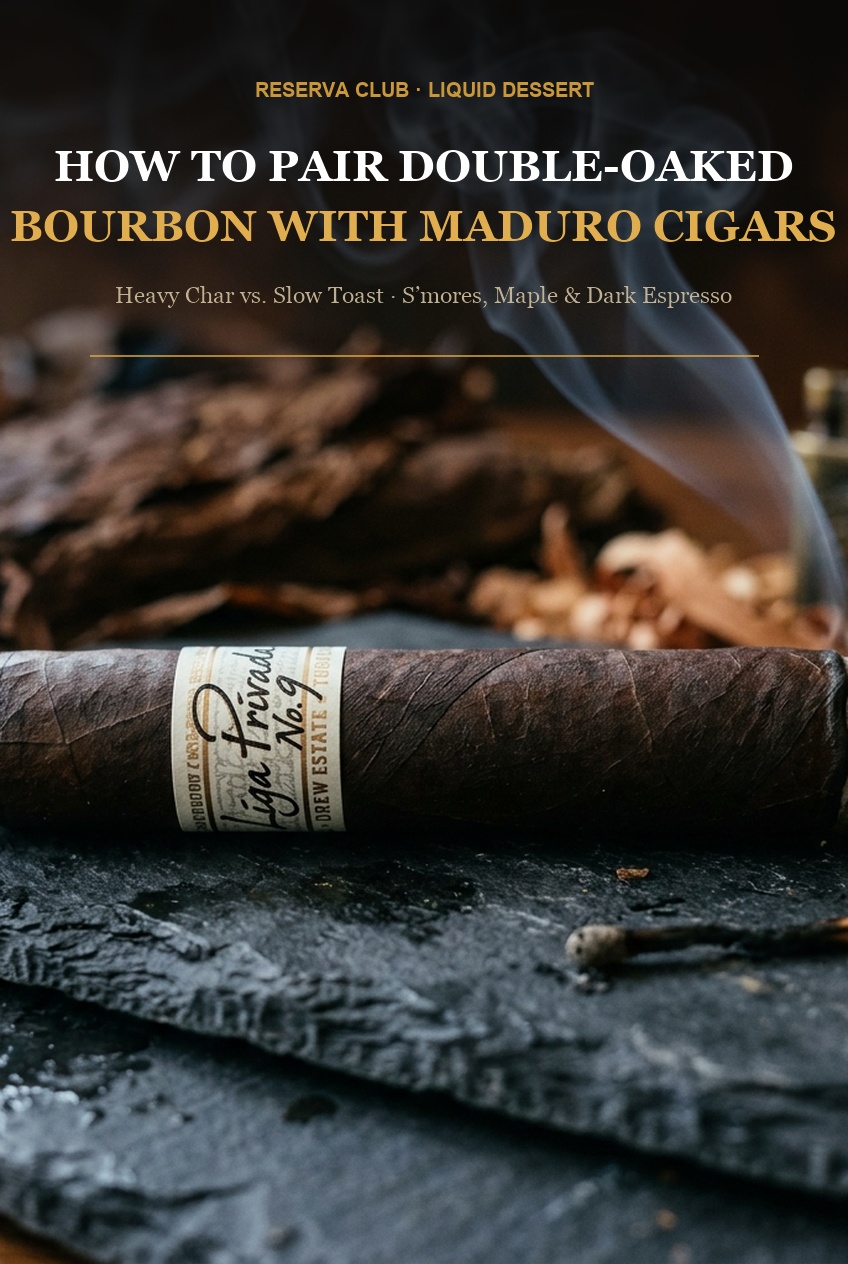
- Match Dark Cocoa with Dark Leaf: The campfire marshmallow and chocolate notes of Old Forester 1910 or Woodford Double Oaked turn a dark Connecticut Broadleaf or San Andrés Maduro into an unforgettable liquid-mocha experience.
- Rest Neat in a Tulip Glass: Pour 2 oz into a Glencairn Bourbon Tasting Glass without ice. At 90–94 proof, even a single melting ice cube will flatten the rich viscous oils extracted from the second barrel.
Track Your Bourbon Shelf & Tasting Notes in Reserva Club
How does Old Forester 1910 stack up against Woodford Double Oaked on your palate? Scan your bottles into Reserva Club to log tasting notes, track secondary valuations, and build custom cigar flights.
More from The Codex
The Cameroon Wrapper Guide: Why African Tooth & Baking Spice Love High-Rye Bourbon
Read Guide →Never Smoke Right Off the Truck: The 14-Day Mail-Call Cigar Rest Protocol
Read Guide →Why 100-Proof Bottled-in-Bond Bourbon Is the Sweet Spot for Cigar Pairing
Read Guide →Electric Wineador vs. Traditional Wood Humidor: The 65°F Cooling Blueprint
Read Guide →The Autumn Patio Pairing: Cask-Strength Wheated Bourbon & Box-Pressed Nicaraguan Puros
Read Guide →Plume Is Always Mold: How to Inspect Cigar Wrappers & Save Your Humidor
Read Guide →
Smoke · Sip · Savor
Track your bottles, fill levels, infinity blends, and real street valuation.
Open My Whiskey Shelf →Reserva Club is reader-supported. When you purchase through links on our site, we may earn an affiliate commission at no extra cost to you. As an Amazon Associate, we earn from qualifying purchases.