
I've Owned 11 Humidors. Here's What I Actually Recommend.
After ruining an entire box of expensive cigars in a cheap desktop humidor, I spent the next three years obsessing over humidity, Spanish cedar, and seals. This is everything I wish someone had told me before I spent a small fortune learning it the hard way.
Table of Contents

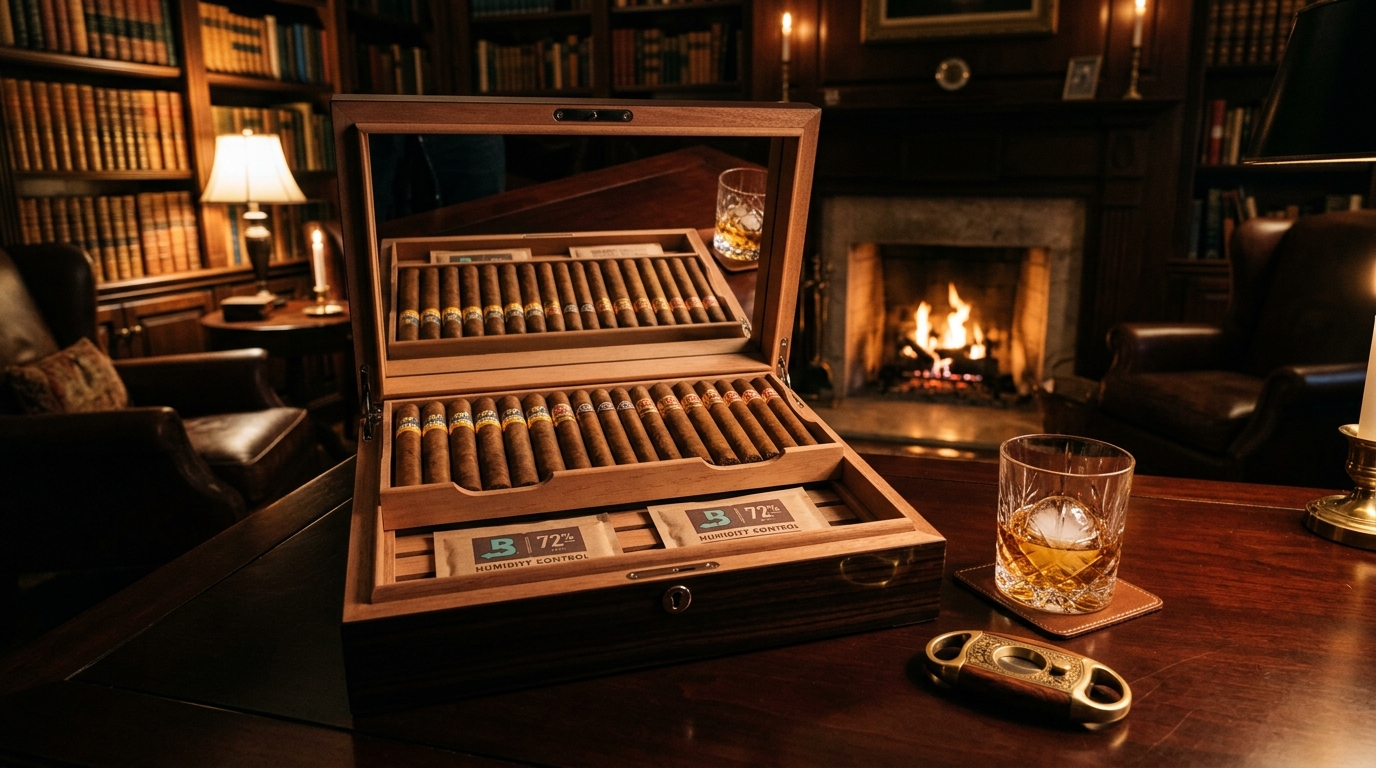
My first real humidor cost me $38 on Amazon. It looked beautiful — dark walnut veneer, a little analog hygrometer built into the front door, brass hinges. I set it up on my desk, dropped about $200 worth of cigars inside, and felt genuinely proud of myself.
Six weeks later I opened the lid and found them cracked, dry, and borderline unsmokable. The hygrometer had been reading 70% the whole time. I later discovered it was running 18 points low.
That was seven years and ten humidors ago. I've since kept a running log of every setup I've tried — desktop boxes, acrylic jars, cabinet humidors, wineador conversions, even a custom-built walk-in at a friend's place in Kentucky. Here is the honest, no-fluff version of what I've learned.
Why Most Cheap Humidors Fail You Immediately
The core problem with inexpensive desktop humidors isn't the wood or the hinges — it's the seal and the hygrometer. A humidor that doesn't seal properly loses humidity through the lid faster than any humidification system can replace it. And a hygrometer that reads inaccurately is arguably worse than having no hygrometer at all, because it gives you false confidence.
Before I bought anything else, I learned to always calibrate a hygrometer first. The method is simple: drop your hygrometer in a sealed zip-lock bag with a damp paper towel, close it tight, and leave it 24 hours. Any accurate instrument should read between 95–97% in that saturated environment. If it reads 80%, you know it's running 15 points low on everything.
The $38 lesson: Never trust the hygrometer that came with a budget humidor. Replace it immediately with a digital one, or budget for a reputable unit upfront.
The Humidity Sweet Spot — and Why 70/70 Is a Myth
For years, the cigar community repeated the "70/70" rule: 70% relative humidity, 70°F. It's not wrong exactly, but it's also not the whole picture.
Most experienced collectors I know — including the guys running cabinet humidors with thousands of sticks — keep their storage between 65–68% RH at around 68–70°F. Here's why that matters:
Lower humidity (65%) slows the absorption of moisture into the wrapper, which means cigars age more slowly and develop more complexity over long stretches. It also leaves more margin for error if your humidification fails briefly — a cigar at 65% has further to fall before it hits the danger zone than one sitting at 72%.
Higher humidity (72%+) makes cigars smoke cooler in the short term but dramatically increases the risk of mold, tobacco beetles, and an overly tight draw that makes you work for every puff.
I run my main desktop at 67% year-round. My aging stash sits at 65%.
The Gear That Actually Works
I'm going to be specific here because I wasted a lot of money learning this through trial and error.
Humidity Control: Forget the Green Foam
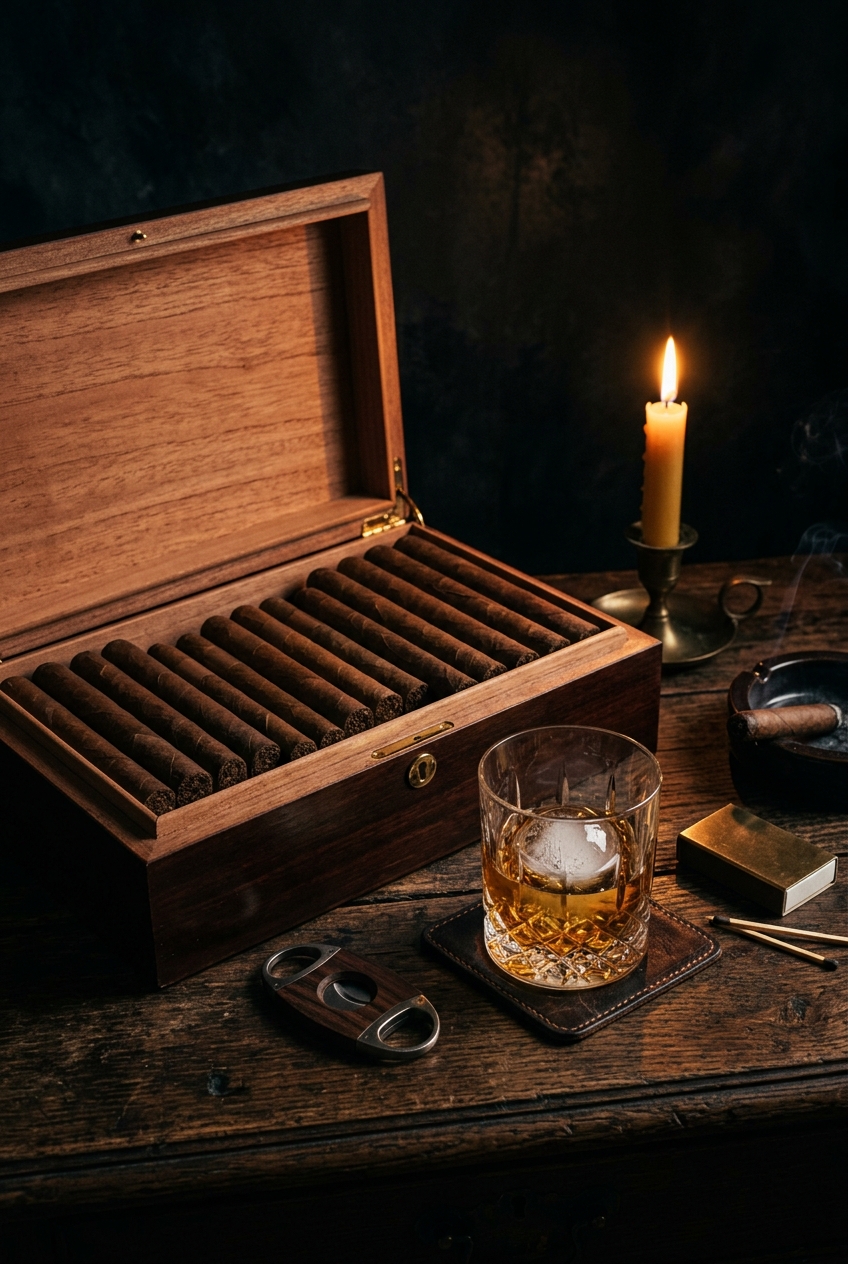
Throw away the green foam humidifier that came with your humidor. It's the single biggest cause of inconsistent humidity in desktop setups. The most reliable solution — and the one I've used for years — is two-way salt-based humidity control packs.
Boveda 69% Humidity Control Packs (10-pack) are the gold standard. They work by releasing or absorbing moisture as needed to maintain a target RH, which means they self-regulate. No guesswork. No maintenance beyond replacing them every 2–3 months.
For a 50-count humidor I use two packs. For a 100-count cabinet, I use four to six depending on how often the door gets opened. Boveda 72% packs are also popular if you prefer a slightly wetter environment or smoke mostly lighter-wrapper cigars.
If you're starting from scratch and want to season a new humidor properly at the same time, Boveda 84% Seasoning Packs are what you need — drop them in the empty box for two weeks before you ever load a single cigar.
Hygrometer: Digital Only
The analog hygrometer built into most humidors is decorative. Full stop. I've tested dozens of them and almost none read within 5% of actual humidity without calibration — and many can't be calibrated at all.
A ThermoPro TP49 digital hygrometer runs about $12 and will never drift more than 1% off calibration over years of use. It's the single best upgrade you can make to any humidor setup and costs less than a single premium cigar.
If you want to get nerdy about it, Inkbird Bluetooth hygrometers let you monitor temperature and humidity remotely from your phone — genuinely useful when you're traveling for a week and want to make sure your collection isn't baking.
The Best Beginner Humidor Under $100
For someone storing 25–75 cigars and who doesn't want to overthink it, the sweet spot is a properly sealed Spanish cedar desktop in the $75–110 range. The most important things to check: genuine Spanish cedar lining (not cedar veneer over MDF), a lid that closes with slight resistance and holds suction for a moment when you open it, and brass hinges.
The Mantello Royale 50-count humidor consistently ranks as one of the top-selling humidors on Amazon for good reason — it's one of the few units in that price tier that uses real Spanish cedar throughout, seals properly out of the box, and doesn't warp in the first year. Pair it with a set of Boveda 69% packs and a digital hygrometer and you have a genuinely solid setup for under $130 total.
For Serious Collectors: The Wineador Conversion
This is the path most serious enthusiasts eventually take, and once you do it, you'll never go back to a desktop box.
A 20 or 24-bottle thermoelectric wine refrigerator has the ideal thermal mass and seal properties to become an exceptional humidor. You remove the wine racks, line the interior with Spanish cedar boards or trays, install Boveda packs, and walk away. The thermoelectric cooling element — unlike a compressor — runs silently and maintains a perfect 65–68°F with zero vibration.
I converted a 24-bottle unit two years ago. It currently holds about 300 sticks at a stable 66% RH and has never given me a single problem. Total cost: around $300–350 for the unit, cedar shelving, and humidity packs. Spanish cedar sheets and trays are what I lined mine with — the smell when you open the door after a few months of aging is genuinely one of the better things in life.
A Note on Temperature
Humidity gets all the attention, but temperature matters more than most people realize. At temperatures above 73°F, tobacco beetles — which exist in larval form in nearly all premium hand-rolled cigars — can hatch and destroy an entire collection in weeks. I learned this lesson the hard way during a Texas summer when our AC went out for four days.
If you're in a warm climate or don't have reliable air conditioning, a wineador becomes less optional and more essential.
The One Step People Always Skip: Seasoning
I ruined my first humidor by skipping this step. Don't skip it.
A brand-new humidor is bone dry. If you put cigars in immediately, the Spanish cedar will aggressively pull moisture out of your cigars over the first few days. You'll end up with cracked wrappers and a harsh, bitter smoke.
The right method: place two or three Boveda 84% seasoning packs inside the empty, closed humidor for 14 days. Don't open it. Don't check it. Let the cedar slowly absorb humidity until it reaches equilibrium. After two weeks, swap in your regular 69% maintenance packs, wait 24 hours, and then load your cigars.
No sponge. No distilled water wipe-down. No drama.
Final Thoughts
The best humidor isn't necessarily the most expensive one — it's the one with the best seal, an accurate hygrometer, a reliable humidity control system, and genuine Spanish cedar lining. Everything else is cosmetic.
Buy the best seal you can afford. Use Boveda packs. Get a digital hygrometer. Season it before you load it.
Follow those four rules and your cigars will reward you for years.
If you want to track your entire collection, log tasting notes after every smoke, and get AI-powered cigar and bourbon pairing recommendations — that's exactly what Reserva Club was built for.
Track Your Humidor & Aging Boxes Free in Reserva Club
Once your humidor is dialed in at 65% RH, stop tracking your sticks on a spreadsheet. Snap a photo of any cigar band inside Reserva Club to auto-fill wrapper, vitola, and aging dates for free.
More from The Codex
The Right Way to Season a Humidor (I Learned This the Hard Way)
Read Guide →Maduro and Bourbon: Why This Pairing Works and How to Do It Right
Read Guide →How Long Does an Opened Bourbon Bottle Last? The 1/3 Fill Rule, Oxidation & Cork Care
Read Guide →The Winter Humidor Drop: How Furnace Heat Drains Cedar & How to Hold 65% RH All Winter
Read Guide →High-Rye Cask Strength Bourbon: Pairing Four Roses, Rare Breed & Barrel Proof Spice with Cigars
Read Guide →Does Ring Gauge Change Cigar Flavor? Lanceros, Robustos, Toros & Wrapper-to-Filler Math
Read Guide →
Smoke · Sip · Savor
Ready to track your cigars, aging dates, and humidor collection?
Start My Digital Humidor →Reserva Club is reader-supported. When you purchase through links on our site, we may earn an affiliate commission at no extra cost to you. As an Amazon Associate, we earn from qualifying purchases.