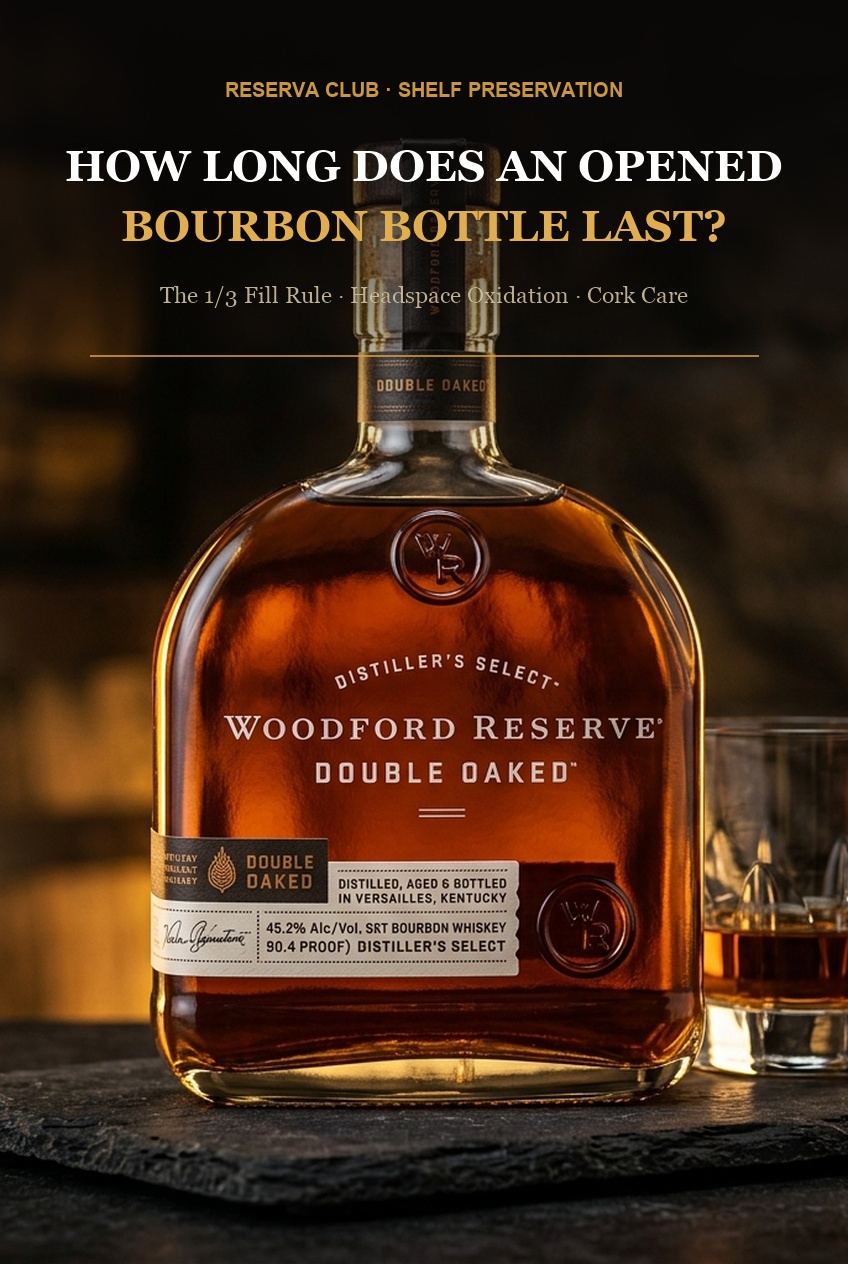
How Long Does an Opened Bourbon Bottle Last? The 1/3 Fill Rule, Oxidation & Cork Care
What happens to opened whiskey bottles over 6 months to 5 years: why headspace oxygen flattens high-proof bourbon below the 1/3 fill line and how to preserve rare bottles forever.
Table of Contents
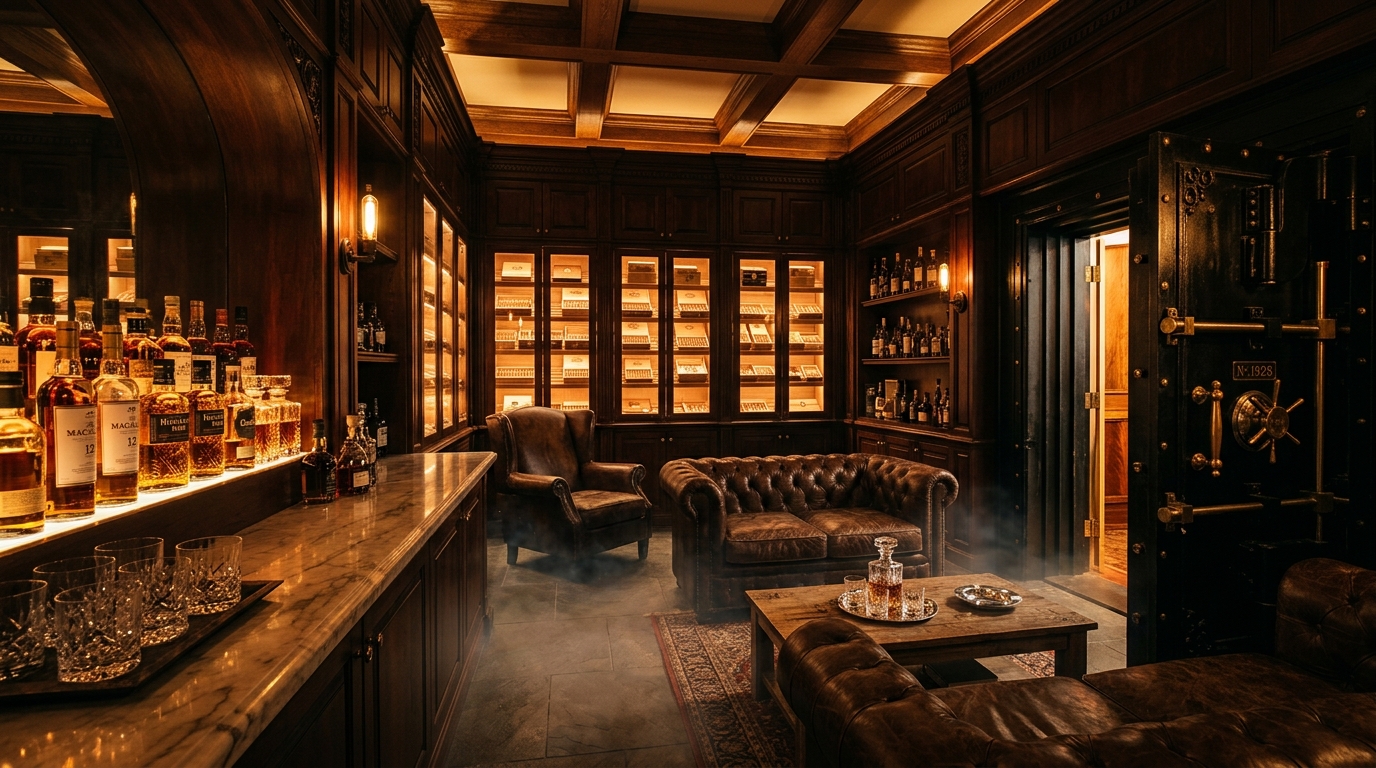
Look at the whiskey shelf of any serious bourbon collector and you will see 30, 50, or 100+ opened bottles—many of them rare single barrels or allocated unicorns with just two or three pours left in the bottom being saved for a special occasion.
Then, two years later, that special occasion arrives. You pop the cork on the last 3 ounces of a prized barrel-proof bourbon, pour it into a Glencairn, and discover the nose has gone completely flat, the bright fruit and caramel have vanished, and the finish tastes dull, papery, and muted.
Unlike wine, high-proof whiskey does not "spoil" or turn to vinegar after opening. However, headspace oxidation and volatile ester evaporation are real—and once a bottle drops below the one-third fill line (33% full), the clock starts ticking fast.
The Science of Headspace: Why the 1/3 Fill Line Is the Turning Point
Every time you uncork a bottle of bourbon and pour a glass, fresh ambient air (21% oxygen) rushes in to replace the liquid.
- When a Bottle Is 75%–90% Full: The ratio of oxygen in the neck to whiskey in the bottle is tiny. Over the first 3 to 6 months, that small dose of oxygen actually improves most bourbons—softening harsh ethanol edges and opening up vanilla and oak aromatics.
- When a Bottle Drops Below 33% Full (1/3 Remaining): Now two-thirds of the bottle is filled with air sitting over a wide surface area of a few ounces of whiskey. Every time you open the cork, another 500 mL of fresh oxygen enters, rapidly oxidizing delicate fruit esters and allowing volatile aroma compounds and ethanol to evaporate into the headspace.
Opened Bourbon Shelf-Life Timeline by Fill Level
| Bottle Fill Level | Air-to-Whiskey Ratio | Peak Flavor Window | What Happens After That Window |
|---|---|---|---|
| 75% – 95% Full (Shoulder High) | Minimal Headspace | 3 to 5+ Years | Softens gently; virtually zero loss of proof or aromatics |
| 40% – 70% Full (Mid-Bottle) | Moderate (1:1 Ratio) | 1 to 2 Years | Sweet spot of oxidation during Months 2–12; gradual mellowing after Year 2 |
| 15% – 33% Full (Below 1/3 Line) | High (2:1+ Air Ratio) | 3 to 6 Months | Fruit & floral top notes fade; cask-strength pours lose punch |
| Under 15% Full ("The Heel" / 1–2 Pours) | Extreme (6:1 Air Ratio) | 30 to 60 Days | Rapidly turns flat, woody, and muted unless decanted |
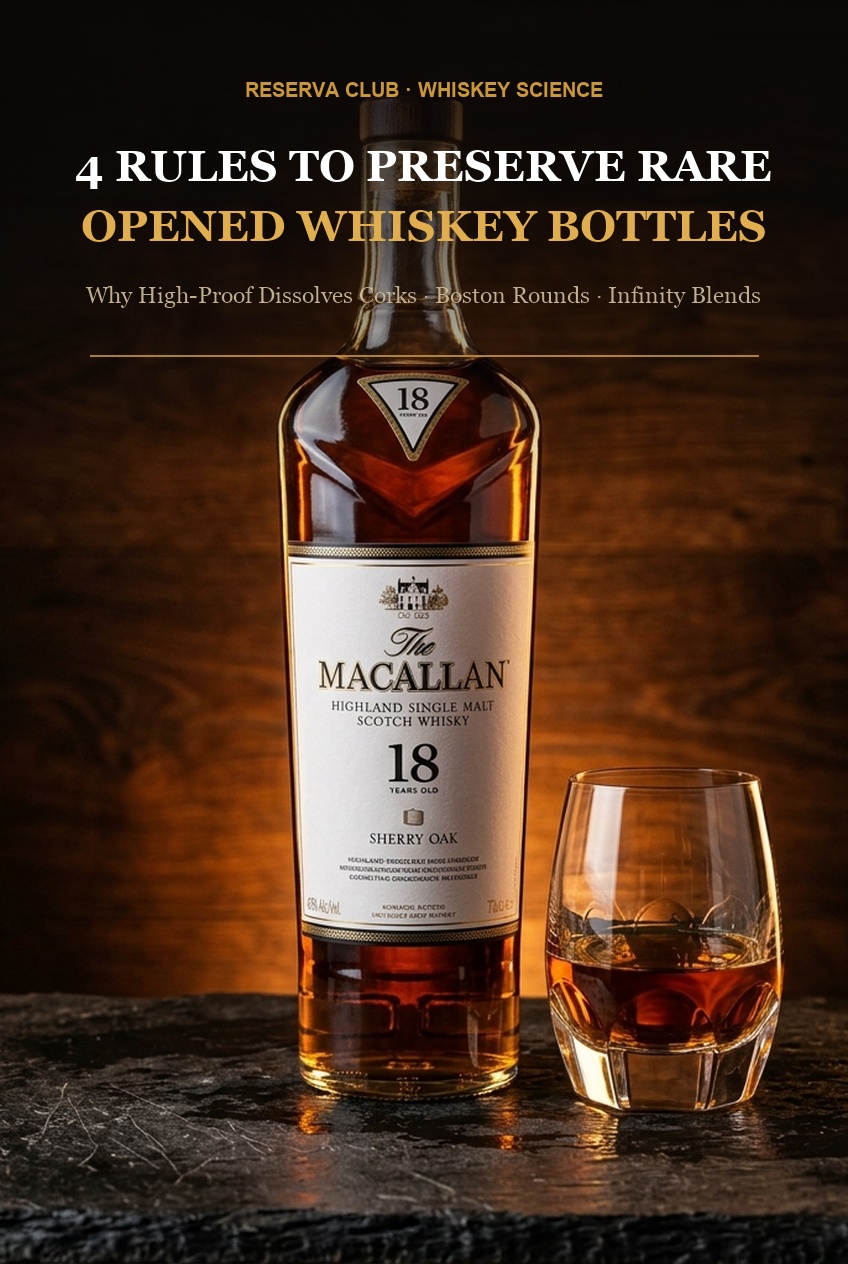
4 Rules to Preserve Your Opened Bourbon Shelf
Rule 1: Never Store Whiskey on Its Side Like Wine!
Wine bottles are stored on their side to keep the cork wet at 13% ABV. Bourbon sits at 45% to 65%+ ABV—high-proof alcohol is a solvent that will dissolve natural cork and synthetic glue, disintegrating the cork into your whiskey and tainting the entire bottle. Always store whiskey strictly upright (and tip the bottle for 2 seconds once every 6 months just to briefly moisten the cork).
Rule 2: Keep Bottles Out of Direct Sunlight & UV Rays
Ultraviolet light from a window breaks down organic compounds in bourbon within weeks, bleaching its mahogany color and creating "light-struck" cardboard off-notes. Store rare bottles in a dark cabinet or shaded bar away from windows.
Rule 3: Transfer Low Bottles into 2 oz or 4 oz Boston Round Sample Bottles
When an expensive allocated bottle drops below 25% full and you want to save the last 2–4 ounces for a future blind flight, decant the remaining whiskey into airtight 2 oz or 4 oz Amber Glass Boston Round Sample Bottles with Polycone Caps. Zero headspace = zero oxidation for years!
Rule 4: Or Pour the Final 2 Ounces Into Your Infinity Bottle
Before the heel of a great bourbon goes flat, log and pour that final 1.5–2 oz into a heavy crystal Airtight Whiskey Infinity Decanter so it lives on in your house solera blend.
Track Bottle Fill Levels & Open Dates in Reserva Club
Want to know at a glance which bottles on your shelf are below the 1/3 fill line and ready to finish or decant? Log your bottles and fill levels inside Reserva Club—100% free forever.
More from The Codex
The Winter Humidor Drop: How Furnace Heat Drains Cedar & How to Hold 65% RH All Winter
Read Guide →High-Rye Cask Strength Bourbon: Pairing Four Roses, Rare Breed & Barrel Proof Spice with Cigars
Read Guide →Does Ring Gauge Change Cigar Flavor? Lanceros, Robustos, Toros & Wrapper-to-Filler Math
Read Guide →Butane Torch vs. Spanish Cedar Spills: How Flame Temperature Changes Your Cigar’s First Third
Read Guide →Single Barrel vs. Small Batch Bourbon: Why Honey Barrels Vary & What Collectors Hunt
Read Guide →Corojo vs. Habano Wrapper Cigars: Decoding Red Pepper vs. Cedar Spice & Bourbon Pairings
Read Guide →
Smoke · Sip · Savor
Track your bottles, fill levels, infinity blends, and real street valuation.
Open My Whiskey Shelf →Reserva Club is reader-supported. When you purchase through links on our site, we may earn an affiliate commission at no extra cost to you. As an Amazon Associate, we earn from qualifying purchases.