
The Master Guide to Infinity Bottles: Solera Math, Proof Calculations, and Blending Chemistry
Pouring the last two ounces of every great bottle into a crystal decanter is one of whiskey's greatest rituals—and easiest ways to ruin good bourbon. Here is how to craft and track a legendary infinity blend.
Table of Contents
- The 3 Mistakes That Ruin Infinity Bottles
- The Mathematical Solera Formula: Volume-Weighted Proof
- The Golden Ratio for Master Blending
- The Resting Period: Why Time in Glass Matters
- Tracking Your Living Solera on Reserva Club
- The Mathematical Solera Formula: Volume-Weighted Proof
- Recommended Heirloom Decanters & Blending Hardware
- Automate Your Solera Tracking on Reserva Club
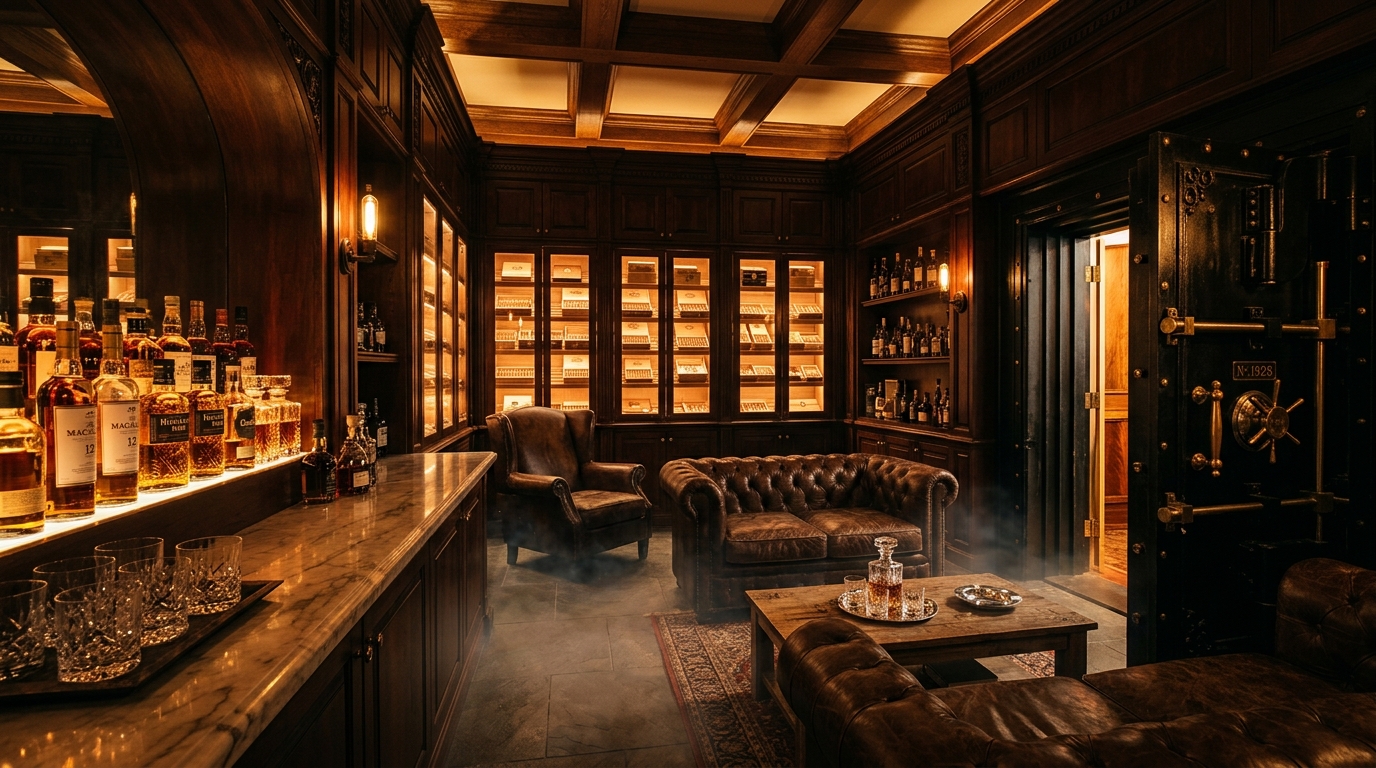
Every whiskey lover eventually reaches the exact same moment: you are staring at a beloved bottle of allocated bourbon with barely two ounces left in the bottom.
It is too little to offer guests at a dinner party, but far too precious to dump down the drain.
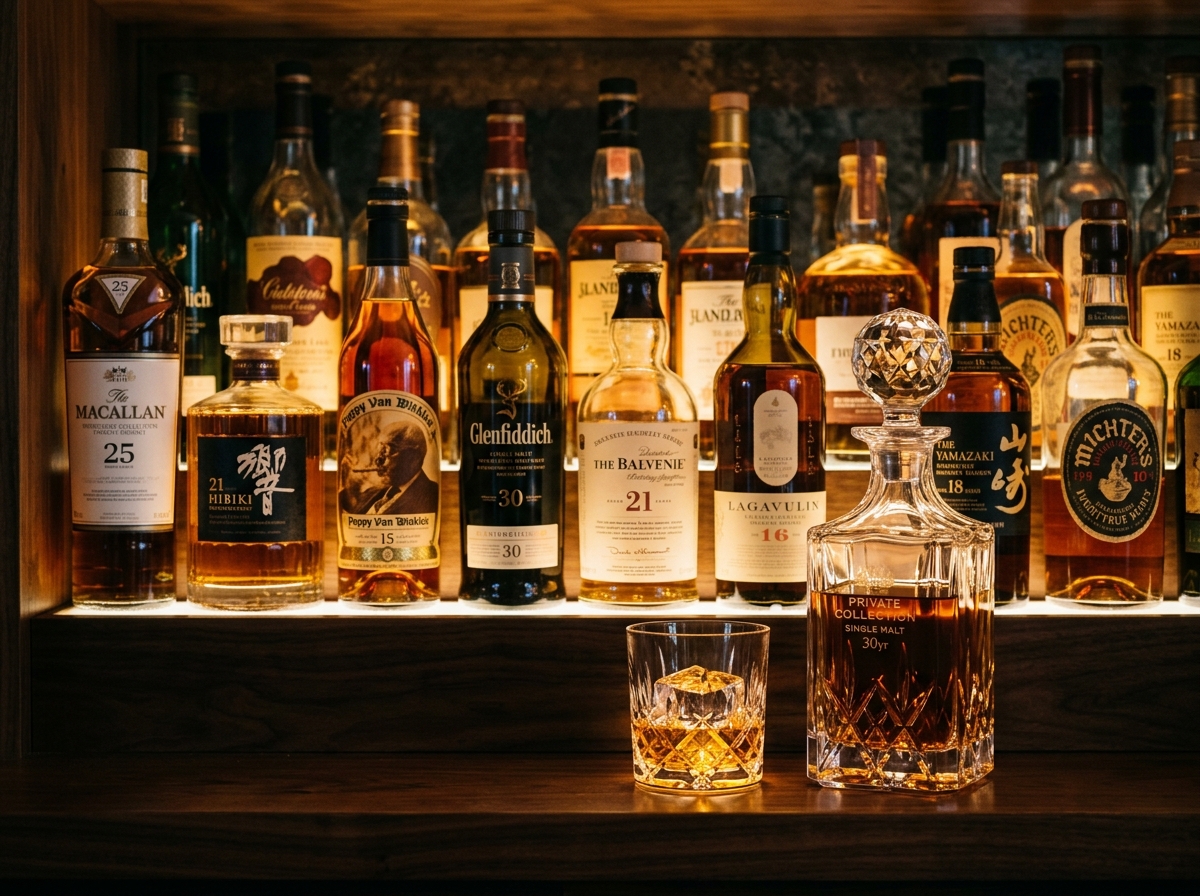
The traditional solution is the Infinity Bottle (also known as a Living Decanter or Solera Blend). You uncork a dedicated glass decanter, pour in those final two ounces, and let it mingle with the dregs of dozens of previous great bottles. Over months and years, the decanter becomes a living, evolving, completely unique whiskey that cannot be bought in any store in the world.
Done correctly, an infinity bottle produces pours of astonishing complexity—whiskeys with ten different mashbills, four different oak char levels, and depths of flavor that single-distillery releases can never achieve.
Done incorrectly, it produces an undrinkable, oxidized mess that tastes like sour oak and regret.
Here is the exact method for building, balancing, and mathematically tracking a world-class infinity bottle.
The 3 Mistakes That Ruin Infinity Bottles
Before discussing what to add, we must address the three fatal errors that turn promising living decanters into drain pour:
1. The Peat & Smoke Contamination
Never, under any circumstances, add heavily peated Islay Scotch (like Laphroaig, Ardbeg, or Lagavulin) into a bourbon infinity bottle. Phenols and peat smoke are dominant volatile compounds. Even a half-ounce of heavily peated scotch will permanently overpower 700ml of delicate vanilla, corn, and caramel bourbon notes for the next five years.
The Rule: Keep separate decanters. Maintain one Bourbon & Rye Solera and an entirely separate Scotch & Peat Solera.
2. The Low-Proof Dilution Trap
Adding 80-proof entry-level whiskey into an infinity bottle ruins the mouthfeel. Low-proof whiskeys contain high water content and lower fatty acid congeners. When added to cask-strength dregs, they drop the overall proof below 90, making the blend feel thin, watery, and dull.
The Rule: Only feed your infinity bottle with whiskey bottled at 90 proof (45% ABV) or higher. Ideal contributors are Bottled-in-Bond (100 proof) and Barrel Proof (115–125 proof) bottles.
3. The Bottom-Shelf Dump
An infinity bottle is not a garbage disposal for bottles you didn't enjoy. If you disliked a craft whiskey because it tasted grassy, immature, or metallic, pouring two ounces into your decanter will not miraculously fix it. It will merely infect the remaining 20 ounces of good whiskey.
The Rule: Only add whiskey that you genuinely loved drinking on its own.
The Mathematical Solera Formula: Volume-Weighted Proof
One of the greatest frustrations of maintaining an infinity bottle on paper or in standard phone notes is tracking the actual ABV and proof of the liquid inside.
Every time you pour 2 ounces of 120-proof barrel proof into 16 ounces of 94-proof liquid, the proof shifts. If you draw out 4 ounces for a tasting flight with friends, the ratio stays the same, but the total volume drops.
The true proof of an infinity bottle is calculated using a volume-weighted arithmetic mean:
$$\text{Blend Proof} = \frac{\sum (\text{Volume}_i \times \text{Proof}_i)}{\text{Total Volume}}$$
For example:
- Starting Base: 10 oz of 90.0° Proof Bourbon = $900$ proof-ounces
- Addition 1: 3 oz of 100.0° Proof Bottled-in-Bond = $300$ proof-ounces
- Addition 2: 2 oz of 124.0° Proof Cask Strength = $248$ proof-ounces
- Total Volume: $15\text{ oz}$
- Total Proof-Ounces: $1,448$
- New Equilibrium Proof: $1,448 \div 15 = \mathbf{96.53^\circ\text{ Proof}}$
Without a digital tool to compute this dynamically, most collectors have no idea whether their decanter is currently sitting at 88 proof or 112 proof.
The Golden Ratio for Master Blending
If you want an infinity bottle that consistently drinks like a $200 allocated release, adhere to this architectural ratio:
- 60% High-Corn / Wheated Bourbon Base: This provides sweetness, roundness, mouthfeel, and deep notes of caramel, vanilla, and honeycomb (e.g., Maker's Mark Cask Strength, Weller, Larceny BP, Woodford Double Oaked).
- 25% High-Rye Bourbon: This injects spice, cinnamon, black pepper, and structural backbone (e.g., Four Roses Single Barrel, Wild Turkey Rare Breed, Old Forester 1920).
- 10% Straight Rye Whiskey: A modest touch of 95/5 or 51% rye whiskey brings mint, clove, and floral aromatics that elevate the nose.
- 5% Finished Cask (Port / Sherry / Cognac Finish): A single ounce of a port-cask finished bourbon (like Angel's Envy or Joseph Magnus) adds dark stone fruit, raisin, and mahogany color.
The Resting Period: Why Time in Glass Matters
When you pour a fresh whiskey into your decanter, the blend needs time to marry.
Ethanol molecules, water, and wood congeners require approximately 7 to 14 days of rest in a sealed decanter at room temperature to form stable chemical bonds. If you pour a shot into the bottle and drink it an hour later, you will taste the components fighting each other on the palate.
Let the decanter rest in a cool, dark cabinet away from direct sunlight. Once a month, give the decanter a gentle swirl to circulate the heavier barrel compounds.
Tracking Your Living Solera on Reserva Club
Reserva Club includes a built-in Infinity Bottle Laboratory designed specifically for connoisseurs:
- Live Proof Calculation: Every time you log an addition from your Shelf to your Infinity Decanter, Reserva automatically recalculates the exact ABV and proof based on volume weights.
- Mashbill Radar: See an interactive visual breakdown of your blend's composition (Wheated vs. Traditional vs. High-Rye vs. Finished).
- Tasting Timeline: Log flight sessions against your infinity bottle as it evolves over months and years, creating an immutable history of your custom blend.
The Mathematical Solera Formula: Volume-Weighted Proof
When blending spirits of varying alcohol contents, calculating the resulting ABV is not a simple arithmetic average. You must compute the volume-weighted contribution of each pour:
32370 ext{Blended Proof} = rac{\sum ( ext{Volume}_i imes ext{Proof}_i)}{\sum ext{Volume}_i}32370
Step-by-Step Solera Calculation Example:
- Pour 1: 4.0 oz of Weller 12 Year (90.0 Proof) $ ightarrow 4.0 imes 90 = 360$
- Pour 2: 3.0 oz of Four Roses Single Barrel (100.0 Proof) $ ightarrow 3.0 imes 100 = 300$
- Pour 3: 2.5 oz of Stagg Jr. Barrel Proof (131.2 Proof) $ ightarrow 2.5 imes 131.2 = 328$
- Total Volume: .0 + 3.0 + 2.5 = 9.5 ext{ oz}$
- Total Weighted Proof-Ounces: + 300 + 328 = 988$
- Resulting Blend Proof: $ rac{988}{9.5} = \mathbf{104.0 ext{ Proof (52.0% ABV)}}$
Tracking these calculations manually in notebooks quickly leads to drift. Using automated solera tracking tools eliminates math errors and ensures you never over-proof or thin your blend.
Recommended Heirloom Decanters & Blending Hardware
Building a bespoke infinity bottle requires food-grade glass, airtight ground seals, and precision pouring tools:
- Heavy Lead-Free Crystal Whiskey Decanters: Standard cork stoppers dry out and crumble over time; ground crystal stoppers provide an airtight, non-reactive seal that prevents headspace oxidation over years of aging. 👉 Heavy Lead-Free Crystal Whiskey Decanter 750ml with Ground Glass Stopper 👉 Viski Rayden Heavy Architectural Crystal Decanter
- Stainless Steel Funnel Set with Removable Mesh Strainer: Avoid tragic spills of allocated whiskey. Fine mesh strainers prevent cork fragments or sediment from contaminating your heirloom vessel. 👉 Stainless Steel Precision Liquor Funnel with Fine Filter
- Borosilicate Glass Graduated Cylinders: Pouring exact ounces or milliliters ensures your proof math matches reality down to the single decimal. 👉 Borosilicate Glass Graduated Measuring Cylinder Set
- Bottle Sealing Wax & Melting Ladle Kit: When your solera reaches its peak harmony, seal 200ml archive bottles with traditional wax seals for multi-year cellar resting. 👉 Bottle Sealing Wax Beads and Melting Spoon Kit
- Top-Grain Leather Cellar Tasting Journal: Keep an analog backup of tasting notes and vintage milestones alongside your digital vault. 👉 Handmade Leather Whiskey Tasting Journal & Cellar Log
Automate Your Solera Tracking on Reserva Club
Reserva Club includes a built-in Infinity Bottle Engine that automatically calculates volume-weighted proof, records every addition, logs flavor milestones, and notifies you when the 14-day marrying period has elapsed.
More from The Codex
Proof Equilibrium: The Sommelier Science of Pairing High-Proof Whiskey and Fine Cigars
Read Guide →The Silo Problem: Why the Modern Connoisseur Outgrows Single-Category Apps
Read Guide →I've Owned 11 Humidors. Here's What I Actually Recommend.
Read Guide →The Right Way to Season a Humidor (I Learned This the Hard Way)
Read Guide →Maduro and Bourbon: Why This Pairing Works and How to Do It Right
Read Guide →How Long Does an Opened Bourbon Bottle Last? The 1/3 Fill Rule, Oxidation & Cork Care
Read Guide →
Smoke · Sip · Savor
Track your bottles, fill levels, infinity blends, and real street valuation.
Open My Whiskey Shelf →Reserva Club is reader-supported. When you purchase through links on our site, we may earn an affiliate commission at no extra cost to you. As an Amazon Associate, we earn from qualifying purchases.